
Excavator Parts: Key Components of an Excavator and Their Functions
Monday, 13 April 2026
Excavator Parts: Key Components of an Excavator and Their Functions
Understanding how an excavator works gives you a real advantage in handling your site operations. When you know which components handle which functions, you make smarter decisions about equipment selection, troubleshoot problems faster, and communicate more effectively across operators and hire providers.
Excavators combine multiple mechanical systems that work together to deliver the digging power, precision, and versatility required for construction, earthworks, and civil projects. From the hydraulic cylinders that power arm movement to the undercarriage that keeps everything stable, every excavator part plays a specific role in overall performance.
This guide breaks down the main excavator components and explains how they contribute to the machines' capabilities on real job sites.
Overview of Excavator Parts
For your convenience, we've built the table below as a quick reference to every main excavator component you need to know. It shows which parts handle specific functions before we cover each system in detail.
| Excavator Part | Function | Role in Excavator Operation |
|---|---|---|
| Upper Structure (or "House") | Contains the engine, hydraulics, cab, and counterweight | Provides 360° rotation and houses core systems |
| Undercarriage | Supports machine weight and enables movement | Delivers stability and mobility across various types of terrain |
| Boom | Primary lifting and positioning arm | Determines reach height and digging depth |
| Arm (or "Dipper Arm") | Secondary articulation point | Controls digging range and precision |
| Bucket | Material collection and function | Converts engine power to controlled force |
| Operator Cab | Protected workspace with controls | Enables safe, precise machine operation |
| Engine | Generates power for all systems | Drives hydraulics and travel motors |
| Attachments | Extended functionality beyond bucket | Multiplies machine versatility for different tasks |
Excavators consist of multiple interconnected systems, each critical for performance, safety, and efficiency on site. When these components function together properly, projects benefit from smoother operation, higher productivity, and improved control.
How an Excavator Is Structurally Designed
The Upper Structure (House)
The upper structure forms the rotating portion of an excavator, mounted on a swing bearing that allows the machine to rotate a full 360 degrees. This house contains the engine, hydraulic pumps, fuel tank, operator cab, and counterweight. Everything above the tracks rotates as one unit, giving operators the ability to dig in one direction without having to reposition the entire machine.
This rotating capability matters greatly on active job sites, especially those that have limited space or multiple trucks that need to be loaded from a single dig position. The counterweight at the rear of the house balances the forces created during lifting and digging, which prevents the machine from tipping forward when handling heavy loads at full reach.
The Undercarriage
The undercarriage supports the excavator's entire operating weight and provides mobility across the job site. This foundation consists of tracks (or wheels on wheeled excavators), track frames, rollers, idlers, and drive motors. The design distributes machine weight over a large surface area, reducing ground pressure and allowing excavators to operate on softer ground where wheeled equipment would sink.
Track width and configuration affect stability and ground contact. Wider tracks provide better flotation on soft ground, while standard tracks let you maneuver in tighter spaces. Rubber tracks minimise surface damage on finished areas, which is great for landscaping or work near existing structures.
The Boom, Arm, and Bucket System
The Boom
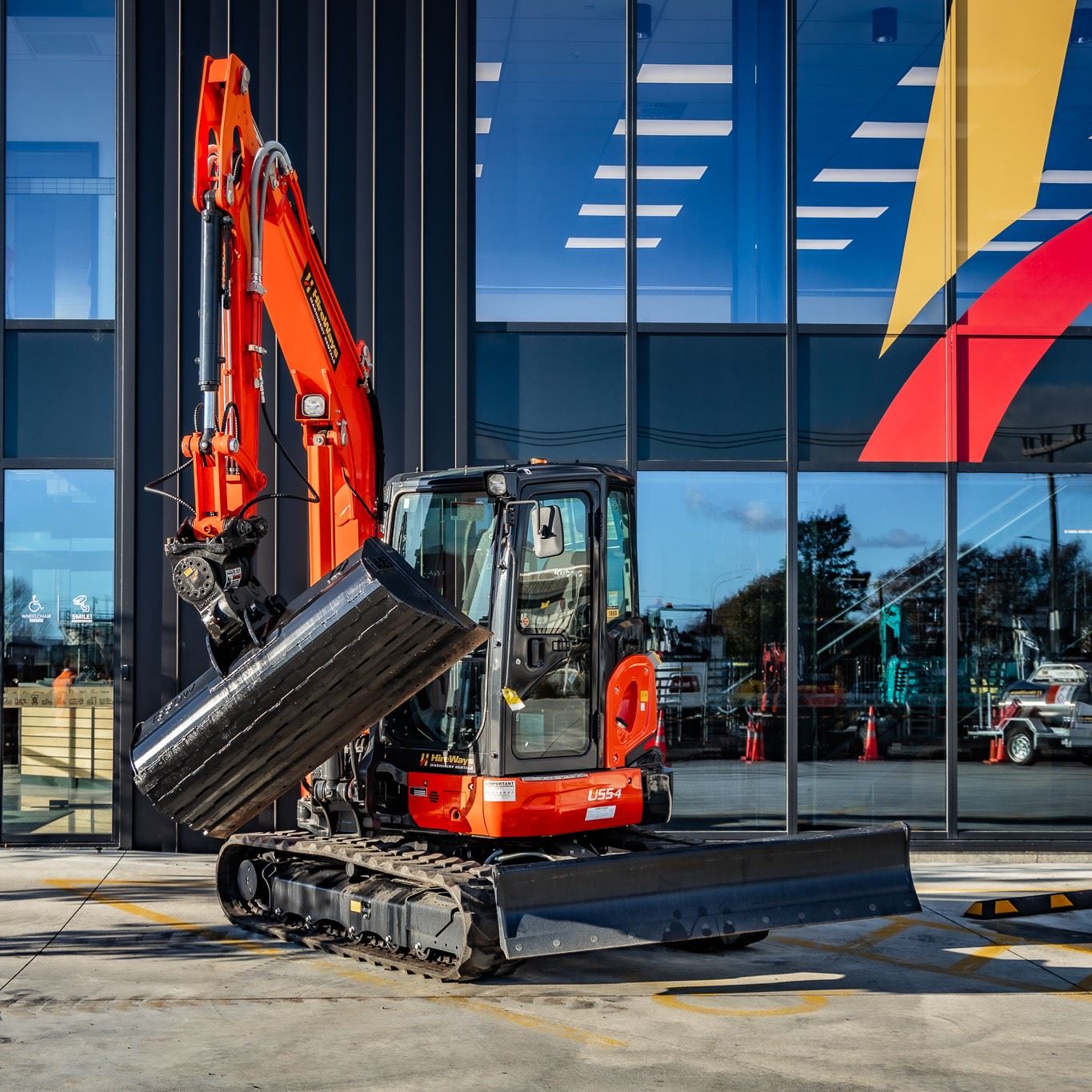
The boom extends from the upper structure and allows for primary lifting and positioning. This large arm determines your excavation's maximum dig depth and reach height, with boom length varying by excavator size. Longer booms increase working radius but reduce lifting capacity at full extension, while shorter booms sacrifice reach for extra digging force.
The Arm (Dipper Arm)
The arm connects to the boom end and provides the secondary articulation point that controls actual digging motion. Arm length affects the working radius and curl force, with shorter arms delivering more power for breaking harder ground and longer arms extending reach into trenches or over obstacles.
The interaction between boom and arm movements creates the characteristic scooping motion that makes excavators effective at removing material in earthwork projects.
The Bucket
The bucket performs the actual excavation work, collecting and retaining material during the dig cycle. Standard digging buckets come in various widths to match different job requirements, from narrow trenching buckets for service installation to wide bulk excavation buckets for moving maximum volume per cycle. Choosing the right bucket will impact your productivity significantly, with the right width and capacity optimising cycle times for different material types and haul distances.
The Hydraulic System: Powering Excavator Movement
Hydraulic Pumps and Cylinders
Hydraulic pumps convert engine power into pressurised oil flow that drives all excavator movement. These pumps generate the enormous forces needed to curl buckets through compacted soil, lift heavy loads, and swing the upper structure. Hydraulic cylinders then convert this pressured flow into linear motion that extends and retracts the boom, arm, and bucket.
Hydraulic Hoses and Control Valves
Hydraulic hoses route pressurised oil from pumps to cylinders, while control valves direct flow based on operator inputs. Control valves respond to joystick movements, which direct hydraulic flow to specific functions with precision. The responsiveness of these valves dictates how smoothly an excavator operates and how much control operators have over bucket positioning.
Operator Cab and Control Systems
The Operator Cab
The operator cab provides a protected workspace with visibility across the dig area. Modern cabs include climate control, suspension seating, and sound insulation that reduce operator fatigue during long shifts. Clear visibility helps reduce the risk of striking buried services or damaging surrounding structures during operation.
Controls and Operating Interfaces
Excavators use joystick controls that allow experienced operators to perform smooth, continuous digging cycles where multiple movements happen at once. The right joystick typically controls boom and bucket functions, while the left handles arm movement and swing rotation. This control layout enables efficient operation once operators develop the coordination needed.
Engine and Supporting Systems
The Excavator Engine
The engine generates power for the hydraulic system and travel motors. Modern diesel engines deliver reliable performance across the power range needed for excavation work. It's worth noting that well-maintained engines running at appropriate loads consume less fuel than undersized engines working at maximum capacity or oversized engines operating below their efficient range. In short, selecting the correct engine capacity improves fuel efficiency and overall machine performance.
Cooling and Filtration Systems
Cooling systems prevent engines and hydraulic oil from overheating during sustained work, while filtration systems remove contaminants from fuel, engine oil, and hydraulic fluid. These support systems require regular maintenance to perform properly, as clogged filters reduce flow and efficiency, or worse, halt your operations.
Attachments and Excavator Versatility
Common Excavator Attachments
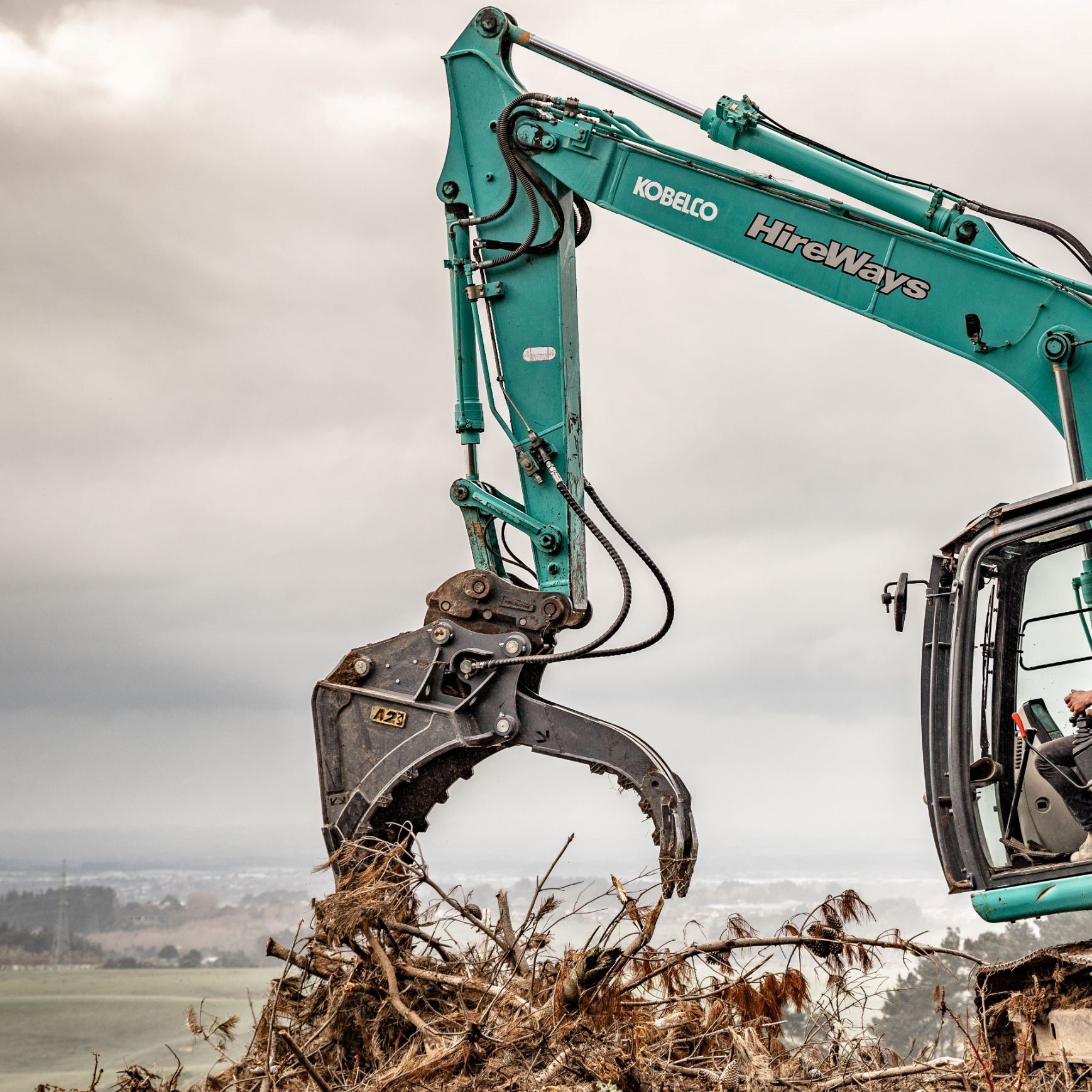
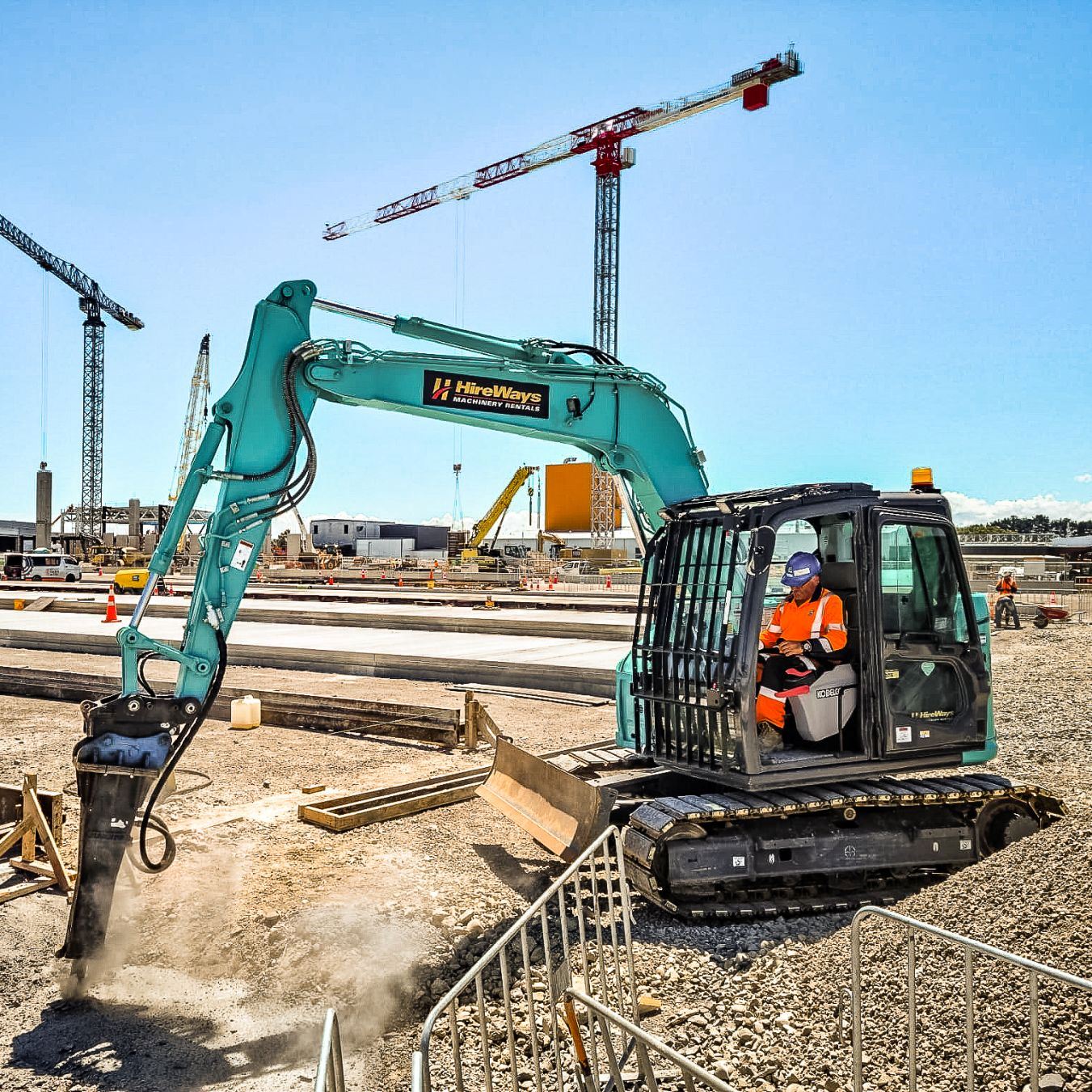
Attachments transform excavators from dedicated digging machines into versatile tools for multiple applications. Rock breakers demolish concrete and break up solid material, augers drill holes for posts or piles, and grabs handle loose material like scrap or vegetation. This versatility means a single machine can handle site clearing, excavation, demolition, and finishing work when equipped with the right attachments. Therefore, reducing the need for multiple machines on site.
Quick Couplers
Quick couplers enable operators to change attachments without leaving the cab, which is a major time-saver for your project. Rather than spending 20 minutes manually pinning on a different bucket, operators switch attachments in under a minute using hydraulic quick couplers. This efficiency matters most when projects require frequent attachment changes throughout the day.
How Excavator Parts Influence Hire Decisions
Understanding excavator components helps you choose machines that match your specific requirements. When you know that boom length affects reach and that track width determines flotation on soft ground, you can specify exactly what your site conditions demand rather than accepting whatever machine happens to be available.
Component condition also matters when selecting excavators for hire. Well-maintained hydraulic systems respond precisely to inputs, while quality undercarriage components reduce vibration and track slippage.
For residential work with tight access, mini excavators for hire offer the compact size and maneuverability needed around existing structures. For bulk earthworks requiring maximum productivity, larger machines with bigger buckets and more powerful hydraulics can move more material per hour.
Conclusion: Selecting the Right Excavator for the Job
Excavator components work together as an integrated system where boom reach, hydraulic power, undercarriage stability, and operator controls all contribute to your excavator's overall performance. Understanding these parts and their functions helps you make confident, informed decisions about which gear is best for you.
Looking for the right excavator?
If you're looking for heavy machinery for rent, work with experienced providers like HireWays who will ensure you receive well-maintained machines configured to perform efficiently for your site conditions.
Reach out to our team to get your free quote. Call us at 0800 447 392 or send an email to HireWays to enquire. Our experts will help match you with the right machine.
Call: 0800 447 392










Leave your comment