
How to Choose the Right Size Dump Truck for Your Job
Friday, 7 August 2026
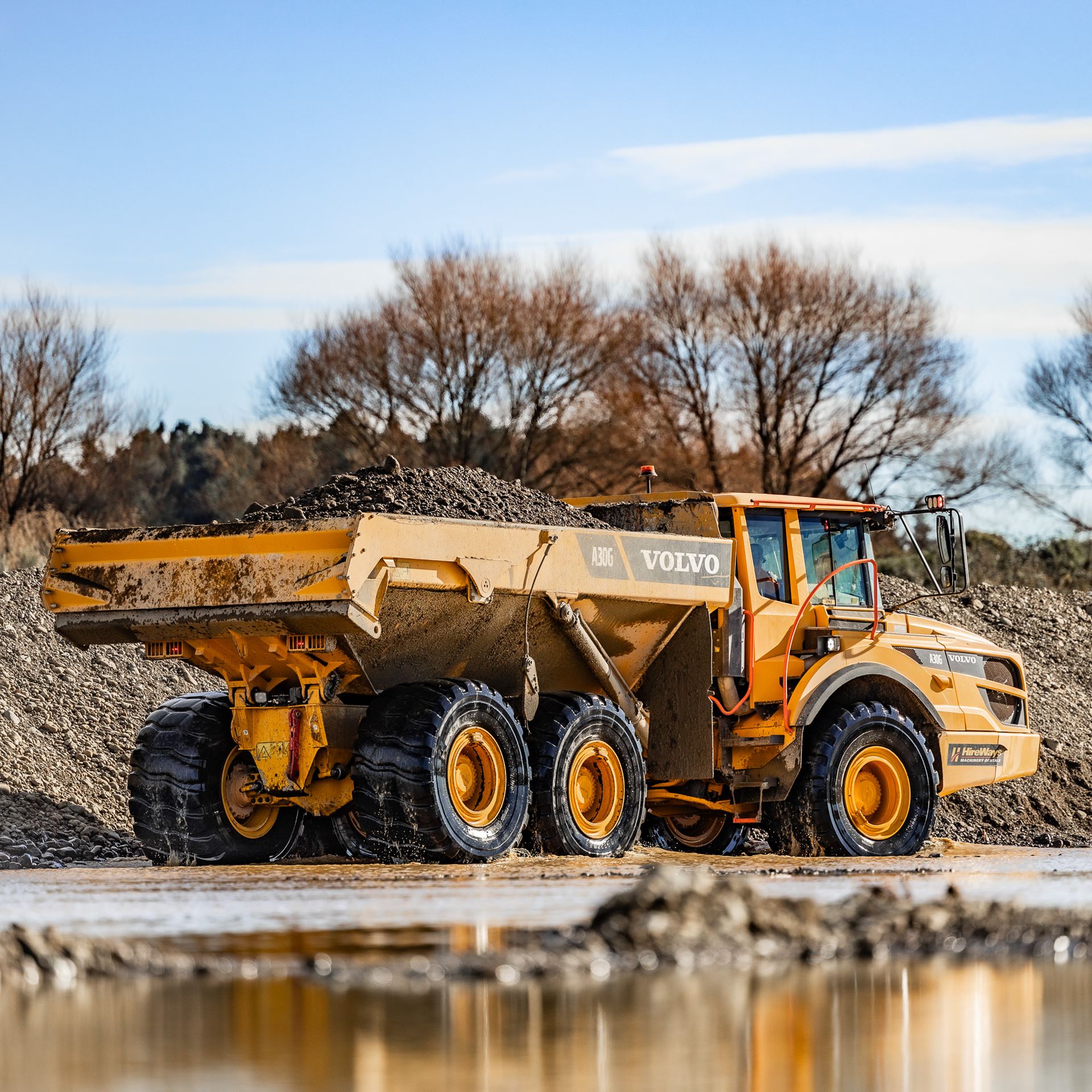
Hiring the wrong size dump truck can cost you by the end of the day. Extra loads you didn't allow for, day rates wasted on unused capacity, fuel costs, and unnecessary delays are all avoidable when you choose the right dump truck from the start.
Getting the size right comes down to three things:
- How much material you're shifting
- What it weighs, and
- How much access your site allows
When you account for these correctly, you can make smarter decisions that can save your operation time, money, and resources.
This guide covers everything you need to know about hiring the right size truck for your project.
A quick word on terms first. In New Zealand, most hire jobs call for a tipper truck — a road-registered truck with a hydraulic tray that carts material to and from site. A dump truck (or dumper) is an off-road site machine, usually articulated, that moves material around on rough ground and stays put. We'll cover both in this guide.
HireWays stocks a full range of dump trucks for hire across New Zealand. Browse the full range or speak with our team for expert advice on choosing the right truck for your project.
Why Getting the Right Size Matters
If you hire a dump truck too small, you leave your driver running back and forth to the stockpile all day when one larger tipper would have cleared the entire job in just two loads. Hire a dump truck too big, and you'll pay for tray space that barely fills up.
On tight residential sites, bigger trucks might not even fit down the driveway, which could mean rebooking equipment and losing valuable project time.
Either way, your excavator operator is paid a day rate waiting for your trucks, and the crew scheduled behind you is waiting on clean ground.
Another equally important factor is compliance. Any vehicle with a Gross Vehicle Mass (GVM) over 6,000kg needs a Class 2 licence for road use, according to NZTA. If someone on your crew is driving the tipper, check their licence before it turns up. Site-only articulated dumpers don't need a road licence, but they do need a licenced operator.
Dump Truck Sizes, Explained
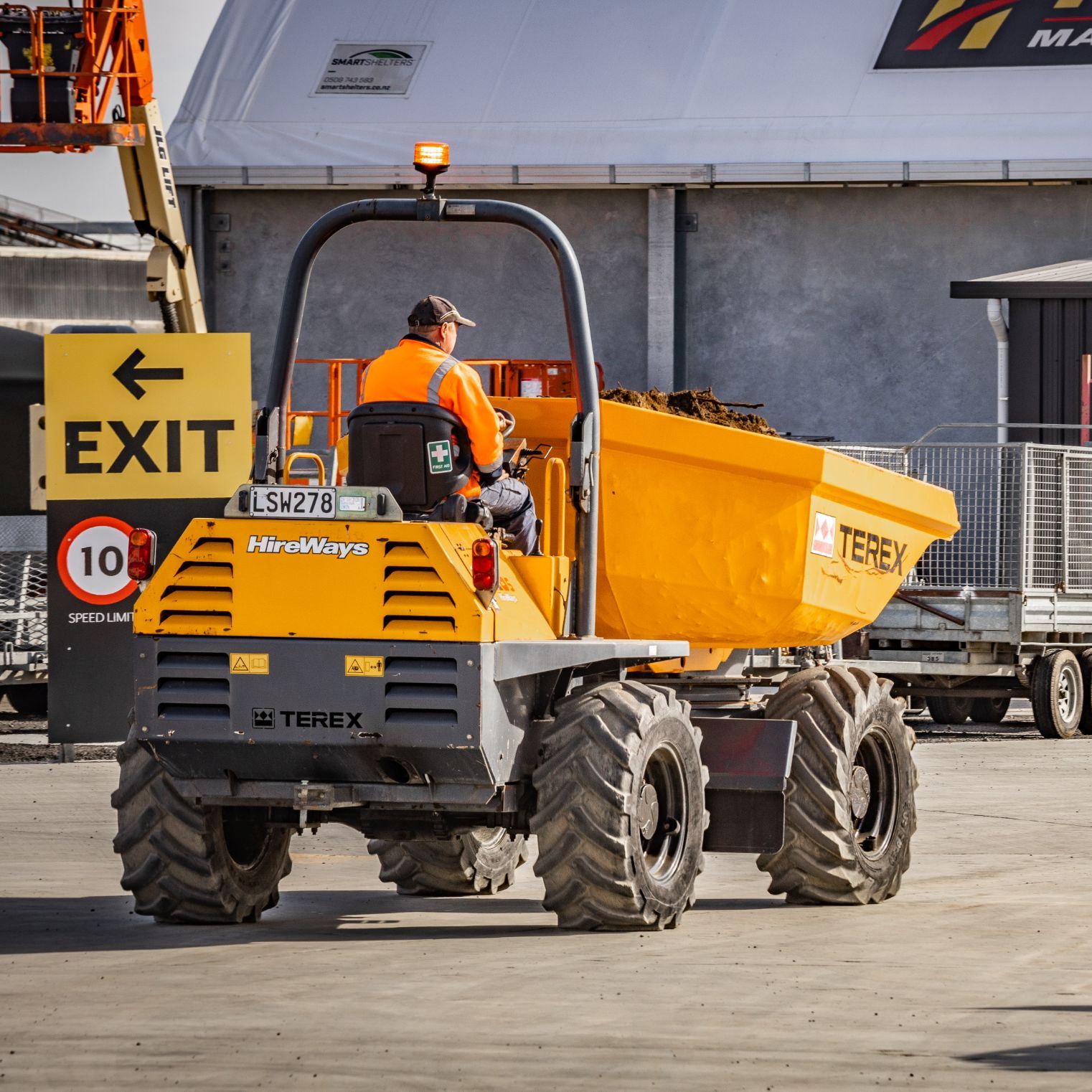
Dump truck sizes are defined by payload capacity, the weight the truck can legally carry when loaded. A five-tonne tipper can carry five tonnes of material, a thirty-tonne dumper carries thirty.
Simple, right? Wrong. There are more factors to consider, from measurements, weight per cubic metre, total tonnage and more. Here's a quick step-by-step process to ensure you land on the right size dump truck.
- Measure the material. Length by width by depth, in metres. That gives you cubic metres (m³).
- Check what the material weighs per cubic metre. Topsoil is lighter than gravel. Wet clay is heavier than dry. The table in the next section covers the common ones.
- Multiply volume by weight. That's your total tonnage.
- Decide your run count. One big load or three smaller ones? Factor in access, tip fees, and the distance between pickup and drop.
- Match the payload. Round up, not down. A truck at 90 per cent of rated load is working as it should. Push it past 100 per cent and you've got a weighbridge problem and a safety problem.
Dump Truck Size Guide: Payload Ranges
The table below pairs common payload ranges with the Hireways truck that fits. Find the tonnage you calculated in step 3, then look across for the recommendation.
| Size Category | Payload | Recommended Truck (available for hire) | Best Suited For | Licence |
|---|---|---|---|---|
| Mini | 1 to 3 tonnes | 2.5 tonne tipper | Backyard landscaping, narrow gates, small garden jobs | Class 1 |
| Small | 4 to 6 tonnes | 5 tonne tipper | Driveways, clean-ups, residential builds | Class 2 |
| Medium | 7 to 10 tonnes | 8 tonne tipper | Civil works, larger landscaping, mid-range earthworks | Class 2 |
| Large | 10 to 12 tonnes | 11 tonne tipper | Subdivision, bulk fill, commercial sites | Class 2 |
| Heavy (off-road) | 7 to 22 tonnes | Hydrema 707G, 912, 912HM, 922G articulated dumpers | Soft ground, cut sites, not for road use | Site use only |
| Extra heavy (off-road) | Up to 30 tonnes | 30 tonne articulated dumper | Bulk earthworks, quarry, heavy civil works | Site use only |
Two things about matching your payload range with the right truck size:
First, if your tonnage sits between brackets (say, seven tonnes on the nose), go up, not down. The extra headroom costs less than a second run.
Second, the Hydrema dumpers and the 30 tonne are site machines, not road-registered tippers. Moving material across a paddock or a cut site? Articulated. Carting to and from a tip? Tipper.
If you're unsure about which truck to hire, contact us to speak with one of our specialists and we will match you with exactly the right dump truck for your job.
Understanding Material Weights
Material density is where quotes start to unravel. Four cubic metres of dry topsoil sits comfortably in a 5 tonne tipper. Meanwhile, the same four cubic metres of wet river rock puts you two tonnes over rated payload.
Use the table below as a quick reference for approximate weight per cubic metre per material. Note that the figures below are industry averages and will vary per supplier and moisture content.
| Material | Approximate Weight per m³ |
|---|---|
| Topsoil (dry) | 1.2 to 1.4 tonnes |
| Topsoil (wet) | 1.6 to 1.8 tonnes |
| Sand (dry) | 1.4 to 1.6 tonnes |
| Sand (wet) | 1.8 to 2.0 tonnes |
| GAP 20/GAP 40 gravel | 1.8 to 2.0 tonnes |
| Crushed concrete | 1.4 to 1.6 tonnes |
| Clay (dry) | 1.6 to 1.8 tonnes |
| Clay (wet) | 1.9 to 2.1 tonnes |
| River rock | 1.9 to 2.1 tonnes |
This means that five cubic metres of wet topsoil, for example, is roughly nine tonnes. That doesn't work in a 5-tonne tipper. You'll need the 8-tonne, or you're running two trips with your truck. Either way, it's a decision worth making before the quote goes out, not after.
Overloading isn't worth the gamble. It can damage your truck, void your insurance, and worse, earn you an infringement at the next weighbridge. Stick to the number on the plate, and you can count on your operation running smoothly.
Use Cases For Every Type of Job

Every job has a size that fits it best. Here's how the common ones break down.
Landscaping and small residential
You'll likely deal with topsoil, compost, mulch, and a few drops of river rock for a path. Narrow gates and tight backyards typically require a 2.5 or 5-tonne tipper for easier access. Pair it with a mini excavator and other extras from our landscaping range, and one team can knock the whole job over in a day.
Driveways and suburban builds
You need something that can handle crushed concrete, GAP 20, a couple of loads of sand. The 5-tonne tipper does most of this work. It fits down a standard driveway, carries enough to keep the builders moving, and your usual driver won't need a Class 2 licence if the truck's being driven on a private site.
Demolition and clean-ups
Concrete, broken brick, timber, and mixed waste. The accumulated weight of these materials adds up quickly, especially once you're pulling slabs. An 8-tonne tipper sees off most residential demolition clean-ups in just one or two runs. On a commercial strip-out, the 11-tonne keeps the skip rotation down and the tip fees predictable.
Civil works and earthworks
Larger earthworks, like civil projects, will have you dealing with bulk fill, spoil, and hard-core, cut material off the pad. On an open site with room to swing, the 11-tonne tipper or the Hydrema articulated dumpers will get the job done efficiently. For soft ground, wet cuts, or chopped-up haul roads, go articulated. For moving material off-site to a tip or stockpile, go tipper.
Pair the tipper with an excavator sized to load it efficiently. A 5-tonne excavator fills a 5-tonne tipper in three or four buckets. A 20-tonne excavator fills an 11-tonne tipper in two. Mismatch your pairings and you'll either slow the load or leave the excavator hanging between trucks.
Tipper truck or trailer?
Sometimes, the cheaper answer is a tipper trailer behind a ute. Shifting two or three cubic metres of dry topsoil across the town? The trailer wins on cost. Once you're over four tonnes or moving anything wet, however, hire a tipper truck instead. Tipper truck hire pays for itself in the time you save.
Can't Decide? Start Here
Still weighing it up? Here's a quick decision map to help you make your decision.
Frequently Asked Questions
What size dump truck do I need for a driveway?
For a standard residential driveway, a 5-tonne tipper covers most jobs. It'll carry the GAP or crushed concrete, fit down the driveway, and tip where you need it. For larger commercial driveways or shared access ways, step up to the 8-tonne.
Do I need a truck licence to drive a dump truck in New Zealand?
It depends on Gross Vehicle Mass (chassis plus payload), not payload alone. Anything over 6,000 kg GVM needs Class 2 on the road. Our 2.5-tonne tipper stays under that line on a light chassis, so a standard Class 1 car licence is enough. The 5, 8, and 11 tonne tippers are Class 2. Site-only articulated dumpers don't need a road licence.
What's the payload capacity of a 5-tonne dump truck?
The dump truck's payload capacity is exactly what the name suggests: five tonnes of material. Volume: that's around three to four cubic metres, depending on density. Dry topsoil closer to four. Wet gravel closer to two and a half. Check the material weight table above before you load.
What's the typical tipper truck payload range in NZ?
Common tipper truck payload sizes in New Zealand run from 2.5 tonnes for tight residential jobs up to 11 tonnes for civil and subdivision work. Off-road articulated dumpers carry more, up to 30 tonnes, but they stay on site. Match your tonnage to the lowest bracket that comfortably covers it.
What's the difference between a tipper and a dumper?
A tipper is a road-registered truck built to cart material to and from site. A dumper is a site machine, often articulated, built to move material around on rough or soft ground. Tippers go to the transfer station. Dumpers stay on site.
Can I hire a dump truck with a driver from Hireways?
Dry hire is standard. If you need a driver with your equipment hire, call us and we'll work out what's available for your dates.
Ready When You Are
When you're ready to get your earthwork projects moving, give HireWays a call. Tell us the site, the material, and the access, and we'll tell you straight which dump trucks are the best for you.
NZ contractors have been relying on our business across the Lower North Island for 25 years, and we've seen most job types you'll put in front of us.
Browse the full range of dump trucks for hire or get in touch.










Leave your comment